
Understanding Microsoft Defender for Cloud Regulatory Compliance Policies
Introduction:
In the realm of cloud security, compliance with regulatory standards is a crucial aspect that organizations must navigate meticulously. Microsoft Defender for Cloud, formerly known as Azure Security Center, offers an innovative solution to this challenge through its regulatory compliance policies. In this blog post, we’ll delve into what these policies are and the benefits they offer to businesses, especially for those utilizing Microsoft cloud solutions.
What are Microsoft Defender for Cloud Regulatory Compliance Policies?
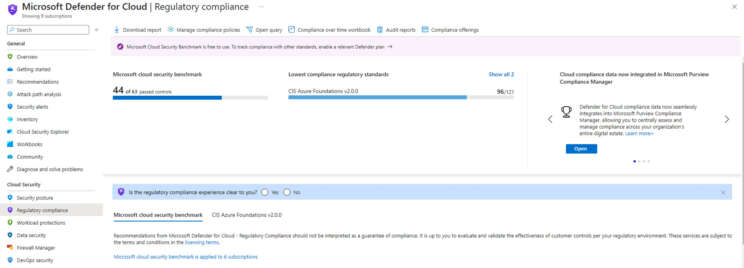
Microsoft Defender for Cloud’s regulatory compliance policies are a set of guidelines and configurations that help organizations assess and manage their compliance with various regulatory standards and best practices. These policies are designed to work within the Defender for Cloud framework, providing a comprehensive view of an organization’s compliance posture across their Azure, hybrid, and multi-cloud environments.
Key Features:
- Integrated Compliance Management: Microsoft Defender for Cloud integrates various regulatory standards such as ISO 27001, PCI DSS, HIPAA, SOC TSP, and more. This integration allows for seamless management and monitoring of compliance across different standards.
- Continuous Assessment: The platform continuously assesses the compliance status of your cloud resources, providing real-time insights into your compliance posture.
- Customizable Policies: Organizations can tailor the compliance policies to fit their specific needs, adding or modifying controls based on their unique regulatory requirements.
- Automated Recommendations: Defender for Cloud provides automated recommendations for improving compliance and reducing risks, helping to streamline the compliance management process.
Benefits of Microsoft Defender for Cloud Regulatory Compliance Policies:
- Enhanced Security Posture: By adhering to regulatory policies, organizations can significantly enhance their overall security posture, reducing the risk of breaches and data leaks.
- Streamlined Compliance Reporting: The platform simplifies the process of compliance reporting, providing clear and concise documentation that can be used for audits and regulatory reviews.
- Cost Efficiency: Automating the compliance process reduces the need for manual interventions, thereby saving time and resources. This automation leads to a more cost-efficient approach to regulatory compliance.
- Risk Management: Continuous assessment and automated recommendations help in proactive risk management, allowing organizations to address potential compliance issues before they become problematic.
- Adaptability to Changing Regulations: The cloud-based nature of Defender for Cloud ensures that the regulatory compliance policies are regularly updated to reflect the latest regulatory changes and best practices.
Conclusion:
Microsoft Defender for Cloud’s regulatory compliance policies offer a robust and dynamic solution for managing compliance in the cloud. By leveraging these policies, organizations can ensure that they meet the necessary regulatory standards, while also enhancing their security posture and streamlining their compliance processes. As the regulatory landscape continues to evolve, Microsoft’s commitment to providing up-to-date and comprehensive compliance solutions positions Defender for Cloud as an essential tool for organizations navigating the complexities of cloud security and compliance